There is a glaring contradiction in many Australian workplaces. Staff walk through Melbourne's laneways, past world-class cafes, to reach an office stocked with instant coffee or a pod machine that produces weak, bitter coffee. This gap between the cafe quality outside the door and the standard inside the office never made sense to me. Closing that gap has been my sole focus since 2008.
Providing barista-quality office coffee comes down to three elements: commercial-grade hardware, fresh milk systems, and properly maintained grinder calibration. If any of these three are missing, your team will immediately taste the difference. They know what a good flat white tastes like, and they will not settle for an inferior cup just because they are sitting at a desk.
Over 17 years of installing machines across Melbourne, I have seen firsthand how the right setup changes workplace behaviour. When you install a proper fresh milk office coffee machine, the daily exodus to the local cafe drops significantly. Your team gets more time back in their day, and you get the satisfaction of providing an actual staff benefit. A documented 3P Digital case study highlights this perfectly, showing a 50% drop in external coffee purchases when the right hardware and beans are introduced. (In my daily operations, this looks exactly like what happened with Pepperl+Fuchs Australia. Upgrading them to a fully installed WMF commercial machine changed the whole office dynamic. The site manager, Paul Bruno, reported easy daily use, great coffee and hot chocolate quality, and consistent service maintained for years.)
Key Takeaways
- Commercial hardware is the baseline: pod machines and home-grade automatics cannot produce true barista-quality office coffee.
- Fresh milk is non-negotiable: achieving cafe standard office coffee requires a machine capable of texturing real milk, not chemical powders.
- Grinder calibration is the secret: precise, dialled-in beans extracted at the correct yield prevent bitter, sour, or weak coffee.
- Accountable service beats corporate helpdesks: when a machine goes down, you need immediate support to ensure your team never goes without coffee.
- Workplace culture shifts instantly: a documented 3P Digital case study showed a 50% drop in external coffee purchases once a proper setup was installed.
Summary Table: Comparing Office Coffee Solutions
| Feature | Pod Machines | Superautomatic (Powder) | Commercial Fresh Milk Machine |
|---|---|---|---|
| Milk Delivery | None or UHT capsules | Dried powder dispensers | Integrated fresh milk fridge |
| Drink Quality | Below average | Average, artificial texture | Barista-quality, microfoam capable |
| Maintenance | Low (descale only) | Moderate (cleaning powder lines) | High (requires daily purging, professional servicing) |
| Cost Per Cup | High (hardware locked) | Moderate | Low (based on bean mass and fresh milk) |
| Staff Satisfaction | Low, often bypassed for cafes | Moderate, high flavour fatigue | High, replicates local cafe experience |
The Hardware Required for Cafe Standard Office Coffee
If you want to replicate the cafe experience at work, the hardware must be commercial-grade. I do not care how convenient a domestic pod machine is, it physically lacks the pump pressure, thermal stability, and group head temperature control required to extract coffee properly. When you evaluate our range of commercial coffee solutions, you are looking at machines designed to handle high volume without compromising on the physics of a good extraction.
The core difference between a home espresso machine and a commercial unit comes down to thermoblock versus boiler systems. Commercial machines utilise multi-boiler technology. This means one boiler is dedicated strictly to brewing espresso at a precise 92 to 94 degrees Celsius, while a separate boiler generates steam. If a machine attempts to do both with a single thermoblock, the temperature fluctuates wildly during peak office demand, resulting in under-extracted, sour coffee.
Matching the machine to the actual team size is a point of integrity for me. I have seen suppliers walk into a 12-person office and try to sell them a $15,000 Eversys. That is an upsell, not a solution. A 12-person team simply needs a reliable, heat-exchange or dual-boiler machine. Conversely, if you have an 80-person team, putting a home-grade Jura on the bench will guarantee a breakdown within a month because the internal components are not built for that volume. The grinder burrs will dull, the group head gaskets will fail, and the pump will burn out. I recommend the machine that fits the team's actual size, chosen on purpose, even if that is the cheaper option.
Why a Fresh Milk Office Coffee Machine is Non-Negotiable
Walk into any good cafe in Melbourne. They do not use long-life milk, and they certainly do not use white powder out of a plastic tube to make a flat white. If your goal is the best tasting office coffee, you must insist on a fresh milk office coffee machine.
Automatic milk frothers that use powdered milk leave a residual film in the heating chambers. Over time, this builds up and alters the flavour profile of every subsequent cup. The texture is also entirely wrong. Powder cannot replicate the fat content and protein structure required to create microfoam. Microfoam happens when steam injects air into fresh milk, breaking down the proteins to create a dense, velvety texture that blends seamlessly with the espresso.
Commercial fresh milk machines integrate a specialised refrigeration compartment and automated milk lines. When a user selects a cappuccino, the machine grinds, doses, tamps, and extracts the espresso, while simultaneously steaming and texturing the fresh milk to the exact temperature required. The result is true cafe standard office coffee.
Consider a busy retail environment I supply in Melbourne. They needed consistently great coffee served daily to both staff and customers. Powder simply would not have survived the scrutiny of their clientele, and it would have ruined the texture of their lattes. By supplying fresh beans and a fully maintained machine, managing the supply and upkeep personally, the owner, Michael May, credited my attention to detail as the exact reason they could serve great coffee every day without interruption.
The Science of Dialled-In Beans and Grinder Calibration
You can have a $20,000 machine and fresh milk, but if your grind size is wrong, your coffee will taste terrible. This is where most office coffee setups fail. Suppliers drop off bags of beans, but nobody actually calibrates the grinder to the machine, the beans, and the ambient humidity.
Coffee extraction is a race against time and solubility. If the grind is too fine, the water struggles to pass through the coffee puck. This increases contact time, leading to over-extraction. The result is a bitter, astringent cup that tastes burnt. If the grind is too coarse, the water rushes through. This causes under-extraction, resulting in a sour, weak, and highly acidic shot.
Achieving barista-quality office coffee requires dialled-in beans. This means the internal grinder is calibrated so that the machine forces water through the coffee puck at exactly 9 bars of pressure for a duration of roughly 25 to 30 seconds, yielding about 30 to 35 millilitres of liquid espresso.
Ambient conditions matter heavily here. Melbourne weather fluctuates drastically from day to day. When humidity spikes, coffee beans absorb moisture from the air, causing them to swell slightly. This changes how they grind. A setting that produced a perfect extraction on Tuesday might choke the machine on Wednesday if a cold front moves in.
This is exactly why we implement the Curated Coffee Plan. Generic, one-size-fits-all bean supplies fail because teams have different palates.
- We ask about the team's drink preferences, specifically whether they lean towards espresso or milk-based drinks, their preferred strength, and any strong dislikes.
- We start them on a well-matched blend based directly on that profile.
- We adjust based on team feedback within the first month.
A team that drinks predominantly milk-based lattes needs a darker, richer roast that can cut through the fat of the milk without tasting burnt on its own. A team that drinks straight long blacks requires a lighter, more complex roast to highlight the acidity and origin notes of the bean. We match the roast and the grind to the team, ensuring the flavour profile hits the mark every morning.
The Difference Between a Supplier and a Coffee Partner
Corporate coffee suppliers route client issues through helpdesks, ticket systems, and tiered support teams. I fundamentally disagree with this model. When a machine goes down at 8:30 AM on a Monday, your team does not have time to log into a portal, generate a ticket number, and wait 48 hours for a contractor to eventually call them back.
My position is simple: one person stays accountable for every client, from setup to ongoing service. That means one number, one person, no call centres, no corporate runaround.
I love what I do because I get to drive throughout Melbourne attending to my clients' coffee machine requirements. Making sure their machines are operating smoothly and fully stocked gives me a good sense of appreciation, because good business practice always means helping clients keep staff happy with good quality coffee and hot chocolate. I remember attending a site recently and coming across a person who worked at a previous client. He was there specifically to meet me and ask for my card. He wanted to give it to his senior management because his current coffee supplier provided the worst coffee he had ever tasted. He needed help setting up new arrangements, and he trusted me to do it.
When AJM-JV, a busy Melbourne workplace, was experiencing disruption whenever their machine went down during peak office hours, the solution was not a better machine. It was better service. I provided a reliably maintained machine with regular scheduled servicing and direct personal contact for any issue. The client, Chrissie Straw, noted that reliable, regular service meant the team always had coffee when they needed it most, entirely eliminating the havoc a broken machine had previously caused.
This direct approach to service means our typical response time on any service call across our active client base is 24 hours. I can offer this because there is no internal runaround to navigate first. Most fixes can be talked through over the phone in two minutes when the person answering the call actually knows your machine, knows your bench space, and knows your team's daily habits.
The Financials: Long-Term Value Over Short-Term Savings
Office managers often ask why they should rent a commercial machine when buying a cheap consumer pod machine seems more economical on paper. The answer lies in utilisation and staff retention.
Consider the daily behaviour of your team. If an employee spends 15 minutes walking to a local cafe, waiting in line, and walking back, that is 15 minutes of lost productivity. If they do this once a day, that is over an hour of lost time per week per employee. When you multiply that across a team of 20 or 40 people, the financial argument for an in-house solution becomes undeniable. The documented 3P Digital case study, showing a 50% drop in external coffee purchases, proves that staff will stay in the building if the coffee is actually good.
Furthermore, long-term value in commercial coffee comes from continuity. Locking clients into long-term contracts to protect business revenue is standard practice for equipment rental. I completely reject this model. All our rentals are month-to-month with one month's notice to exit and free machine pickup. I operate this way because I am not trying to be the biggest. In 17 years, this no-lock-in, ever policy has never cost a client worth keeping. Long-term clients retained by choice are worth infinitely more than clients retained by a contract.
As of 2026, we service 200+ active Melbourne workplace clients currently renting. Our average client relationship length is over 5 years. We have installed for teams up to 400+ people. None of those clients stayed because of a legal clause. They stayed because we consistently deliver the coffee moments that matter.
Our Standardised Implementation Process
When a Melbourne business decides to upgrade their workplace coffee, the transition must be seamless. To ensure consistency and quality, every new client engagement follows our Six-Step Process. We do not skip steps, because skipping steps leads to bad coffee.
- Enquiry: This takes 2 minutes. The client submits basic team details through our site.
- Phone call with Chris: I personally spend 15 to 20 minutes on the phone with you to build a machine shortlist and provide rough pricing.
- On-site visit: I come to your office for a 30-minute site visit to assess your power, plumbing, and bench space.
- Install day: The install takes 45 minutes. The machine is connected safely, the grinder is dialled in, and we pull test shots until the extraction is perfect.
- First brew and training: We spend 20 minutes training at least two staff members on basic maintenance and cleaning, and we leave a cheat sheet on the wall.
- Ongoing rhythm: We establish a rhythm of weekly or fortnightly service visits to ensure beans, milk, and consumables are always topped up.
This highly structured approach is designed around your culture and budget. We do not just drop a machine at the loading dock and drive away. We ensure the physical installation works, the team knows how to use it, and the beans are matched to their specific tastes.
Elevating the Workplace Experience
Providing true barista-quality coffee in the workplace is an expectation, not a luxury, in the modern Australian business landscape. The gap between the coffee you drink on the weekend and the coffee you drink at your desk should not exist.
By insisting on commercial-grade hardware, demanding a fresh milk system, and prioritising precise grinder calibration, you can replicate the Melbourne cafe experience inside your own office. When you pair that hardware with accountable, direct service, you eliminate the downtime and frustration that plagues most corporate coffee setups.
If you want to upgrade your workplace, explore our full range of coffee solutions. Better yet, stop guessing what your team might like and let them taste the difference for themselves. You can book a free trial and tasting today, and we will bring the cafe experience directly to your boardroom.
References
- 3P Digital Case Study (2024). Internal Client Data: Impact of Commercial Coffee Installations on External Coffee Purchases. (Data provided by the client).
- Boutique Coffee at Work (2026). Active Client Metrics and Service Response Averages. Internal Book of Business Data.
- Specialty Coffee Association (SCA). Coffee Extraction Standards and Brewing Protocols.
Frequently asked questions
What exactly makes office coffee "barista quality"?
Barista quality means the coffee is extracted using precise water pressure and temperature control, similar to what you find in a commercial cafe. It requires fresh, properly ground beans, real fresh milk textured into microfoam, and hardware that maintains thermal stability during high-volume use.
How important is a fresh milk system compared to powdered milk?
A fresh milk system is critical. Powdered milk alters the flavour profile of the coffee and cannot create the dense microfoam required for a proper flat white or latte. Fresh milk contains the specific proteins and fats needed to achieve cafe standard office coffee.
How often do commercial office coffee machines need servicing?
Machines require daily backflushing by the office staff, which we train your team on during installation. For professional servicing, we establish an ongoing rhythm of weekly or fortnightly service visits depending on your team's volume, ensuring the machine remains fully stocked and descaled.
Do we have to sign a long-term contract to rent a machine?
No. Unlike most corporate suppliers, all our rentals are strictly month-to-month. You only need to provide one month's notice to exit, and we will pick up the machine for free. We believe in retaining clients through quality service, not legal lock-in clauses.
What happens if the coffee machine breaks down during office hours?
You call my direct mobile. We operate on a one number, one person philosophy with absolutely no call centres. Most issues can be diagnosed and resolved over the phone in minutes. If an on-site visit is required, our typical response time across our active client base is 24 hours.
Can we customise the type of coffee beans we receive?
Yes. We use a framework called the Curated Coffee Plan. We start by asking about your team's specific drink preferences and strength requirements. We then match a specific roast to those preferences and adjust the supply based on direct feedback from your team within the first month.
How quickly can a new machine be installed in our office?
Our standard implementation framework, the Six-Step Process, is designed to take most Melbourne clients from the initial phone call to a fully installed machine in 5 to 7 business days, assuming power and plumbing requirements are already in place.
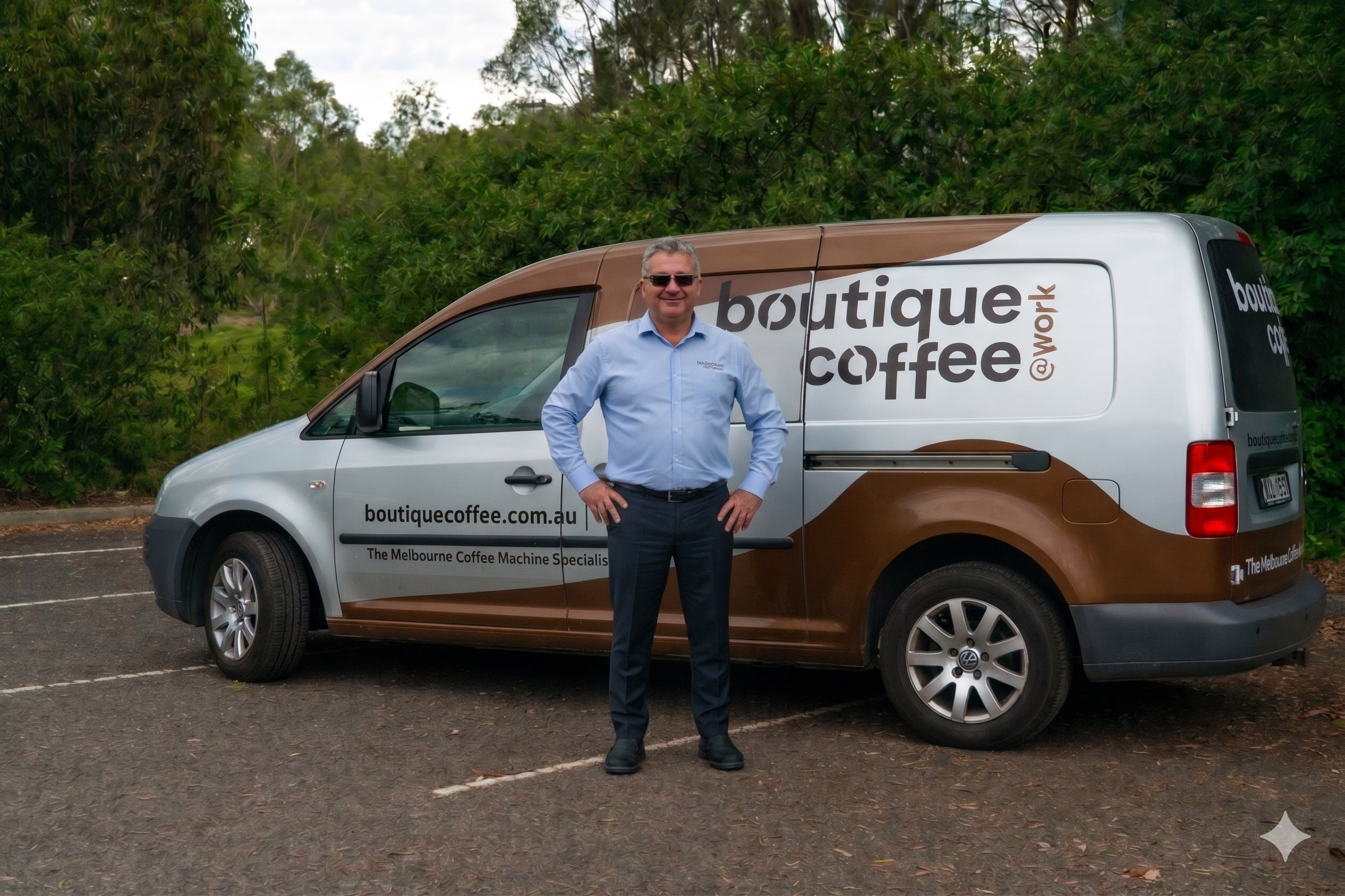
Chris
Chris
Keep reading
Buying Bulk Coffee Beans for the Office: Cost, Freshness & Supply Guide
Most Australian businesses buy coffee the wrong way. They focus entirely on the upfront price per kilogram and completely ignore the logistical reality of…
Commercial Office Coffee Vending Machines: Are They Worth It for Australian Workplaces?
Walk into any Australian office and you will see the same behaviour pattern. People arrive, drop their bags, and head straight for the kitchen. They want…
How to Choose an Office Coffee Supplier: Evaluation Checklist & SLAs
Choosing an office coffee supplier is a decision that directly impacts your daily operations, staff morale, and facility management budget. Most businesses…