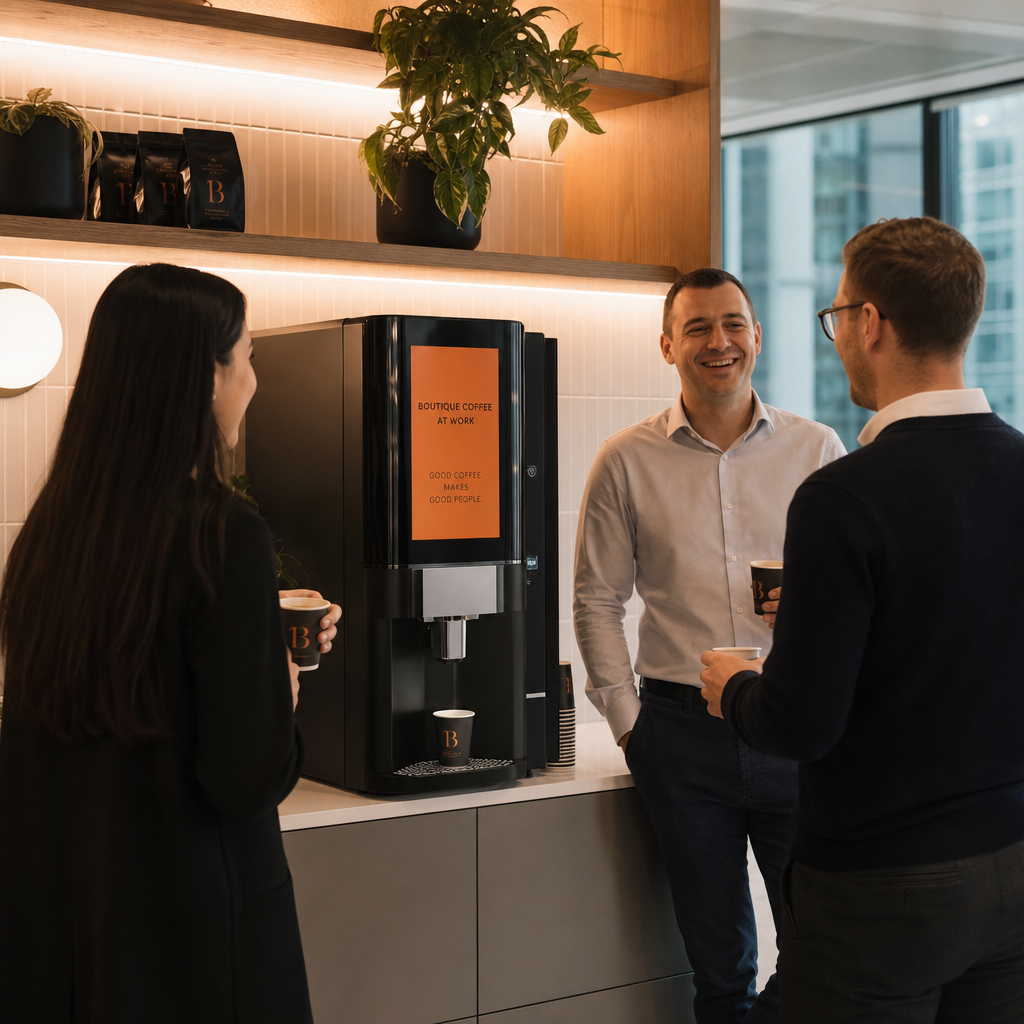
Walk into any Australian office and you will see the same behaviour pattern. People arrive, drop their bags, and head straight for the kitchen. They want caffeine before they open their emails. If the kitchen has a good setup, the morning starts well. If it has a jar of instant coffee, you can feel the morale drop.
Too many Australian workplaces accept a massive gap between the coffee quality outside the door and the coffee inside the office. We are surrounded by great cafes in cities like Melbourne, yet offices force their teams to drink bitter instant powder. Commercial office coffee vending machines exist to close that gap. They provide a proper caffeine hit without the wait or the $5 cost of a retail cafe.
In this post, I will break down exactly how modern commercial setups work, why traditional vending machines give the whole industry a bad name, and how to choose the right system for your team size. If you want to explore specific models and pricing structures, you can review our full range of workplace coffee solutions.
Key Takeaways
- Modern office setups use fresh milk and whole beans, leaving instant powder and stale capsules in the past.
- Matching the machine capacity to your actual team size prevents breakdowns and avoids overspending on your rental.
- Direct, personal maintenance ensures your machine stays operational, a reality backed by the 3P Digital case study showing a 40% reduction in vending maintenance through proactive servicing.
- Coin operated coffee machines suit public spaces, while staff rooms benefit from automated direct-debit setups.
- Month-to-month rentals without lock-in contracts are the standard for reputable suppliers who rely on service quality to retain clients.
Summary: Comparing Office Coffee Options
| Feature | Traditional Vending (Powder) | Pod / Capsule System | Modern Commercial Bean-to-Cup |
|---|---|---|---|
| Ingredient Quality | Freeze-dried powder, UHT milk | Pre-ground coffee, sealed | Fresh whole beans, fresh milk |
| Taste Profile | Bitter, metallic, stale | Better than powder, inconsistent | Café quality, dialled-in beans |
| Maintenance Burden | Low (but parts fail mechanically) | High (constant cleaning, pod disposal) | Moderate (requires professional servicing) |
| Cost Per Cup | Low (but high staff dissatisfaction) | High (proprietary pods add up) | Medium (bulk beans, predictable flat rate) |
| Environmental Impact | Moderate (packaging waste) | Very high (single-use plastics and aluminium) | Low (compostable grounds, recyclable milk containers) |
The Death of the Traditional Commercial Coffee Vending Machine
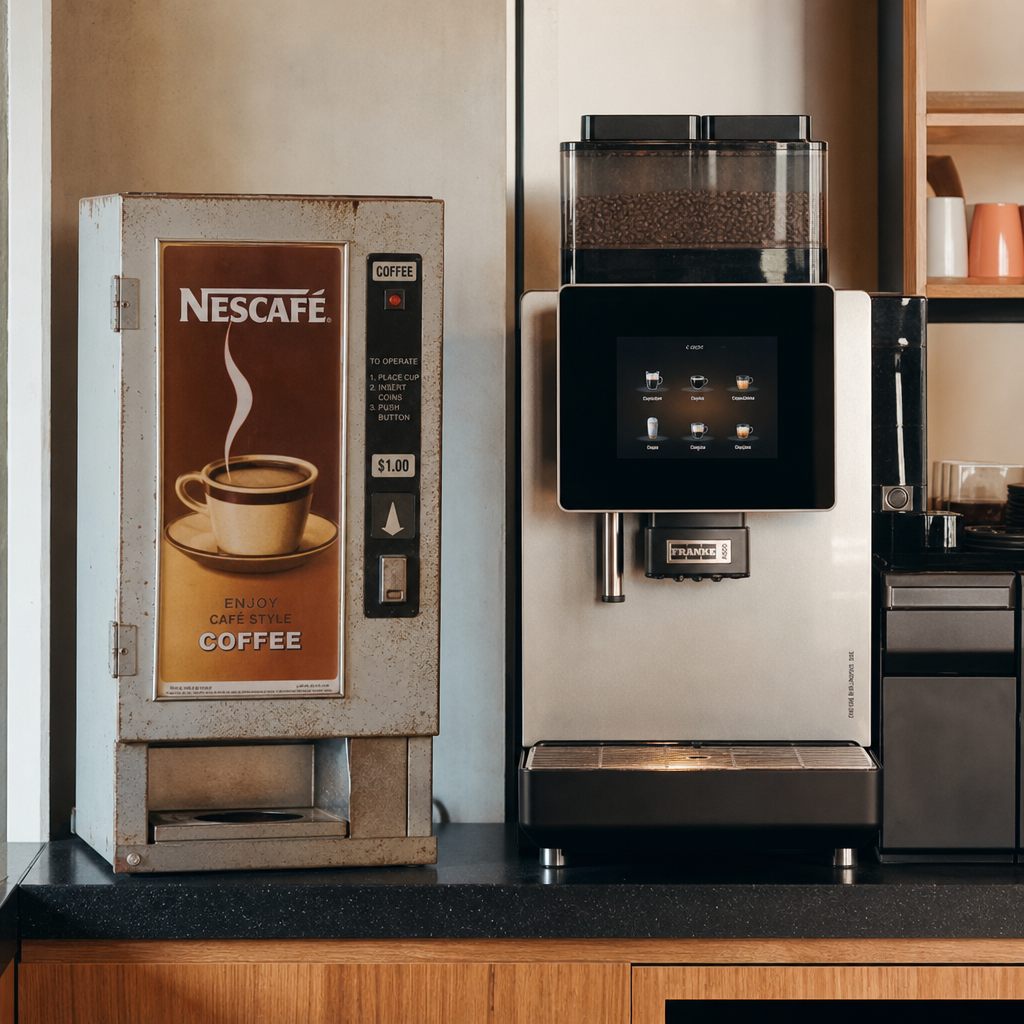
When you hear the words "commercial coffee vending machine", you probably picture a clunky metal box dropping paper cups filled with brown water. That outdated perception hurts the modern industry. Traditional vending machines relied entirely on instant powder and artificial flavourings. They offered zero freshness.
Modern offices have completely moved away from this model. Today, a commercial coffee vending machine is a fully automated barista system. Instead of powder, these machines feature built-in grinders. They process whole roasted beans on demand. Instead of UHT long-life milk from a carton, they integrate real milk refrigeration units. The result is genuine espresso, not reconstituted powder.
This change matters because employee expectations have evolved. According to the Australian Bureau of Statistics (ABS), Australians consume roughly two kilograms of coffee per person each year. Your team knows what good coffee tastes like. Serving them instant powder from an older automatic office coffee dispenser signals a lack of care for their daily comfort. Upgrading to a fresh bean-to-cup machine is the easiest way to show your team you value the coffee moments that matter.
Fresh Milk vs Powdered Milk: The Office Dealbreaker
If you are currently deciding on an office coffee setup, the milk system is the most critical component to evaluate. This is where cheap machines cut corners.
Older commercial setups use powdered milk. Powder milk never tastes like real milk. It has a distinct chemical aftertaste. It ruins flat whites and lattes. Modern bean-to-cup machines use fresh milk systems. These systems steam real milk using a mechanical frother. The difference in the cup is enormous.
Fresh milk requires more cleaning. The milk lines must be flushed daily to prevent bacteria buildup. A lazy supplier will install a fresh milk machine and leave your staff to figure out the cleaning cycle. If the cleaning protocol is ignored, the milk lines block, the machine stops working, and your office panics.
This is why our service model at Boutique Coffee at Work works differently. We do not just drop off a machine and hope for the best. We handle the maintenance. I personally check the milk lines, calibrate the grinders, and ensure the machine is sanitary. This proactive approach delivers results. An independent digital marketing case study by 3P Digital highlighted that proactive, scheduled servicing delivered a 40% reduction in vending maintenance calls. We do not wait for machines to break. We service them so they keep pouring perfectly.
Choosing the Right Capacity for Your Team Size
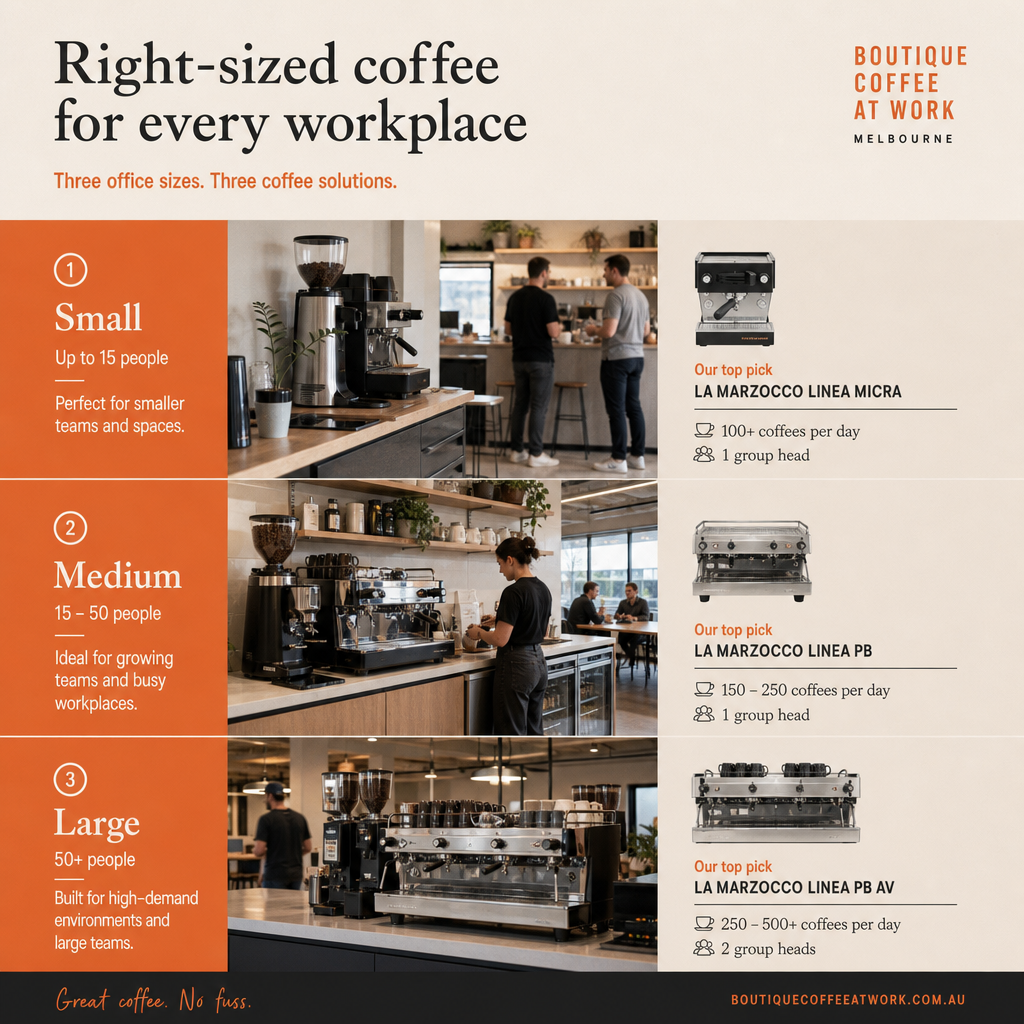
Choosing a commercial coffee vending machine is entirely about matching capacity to headcount. Too many suppliers try to upsell offices into massive machines they do not need. A 12-person team does not need a $15,000 multi-boiler Eversys. On the flip side, an 80-person team will completely destroy a domestic-grade home machine within a month.
Here is how I assess team sizes based on 17 years in the field:
Small Teams (5 to 20 people)
For small offices, a compact automatic office coffee dispenser is ideal. These machines are Plumbed-in (meaning they connect directly to your water supply) and feature single bean hoppers. They take up minimal bench space and deliver consistent espresso. Because the volume is lower, a weekly restock of beans and a fortnightly deep clean keeps them running perfectly.
Medium Workplaces (20 to 80 people)
Medium offices need a true commercial bean-to-cup machine. WMF machines are my go-to here. They handle high volume without overheating. For this tier, you need a larger bean hopper, dual hoppers if you want to offer regular and decaf, and a robust fresh milk system. At this size, your supplier needs to check the machine weekly to ensure the grinder burrs are clean and the brew group is clear of coffee oils.
Large Enterprises (100 to 400+ people)
Largest team size I have personally installed for is 400+ people. Large offices need heavy-duty equipment. A standard office machine will burn out under that volume. You need an automated system with dual grinders, high-capacity bean storage, and automated cleaning cycles. You also need a strict logistics plan for milk delivery and waste management. At this scale, we implement a structured service rhythm to ensure your team never goes without coffee.
I am not trying to be the biggest. I just focus on getting this matchmaking process exactly right. If a team needs a smaller setup, I tell them to buy it outright rather than overpaying on a rental contract.
Coin Operated Coffee Machines: Staff Rooms vs Public Spaces
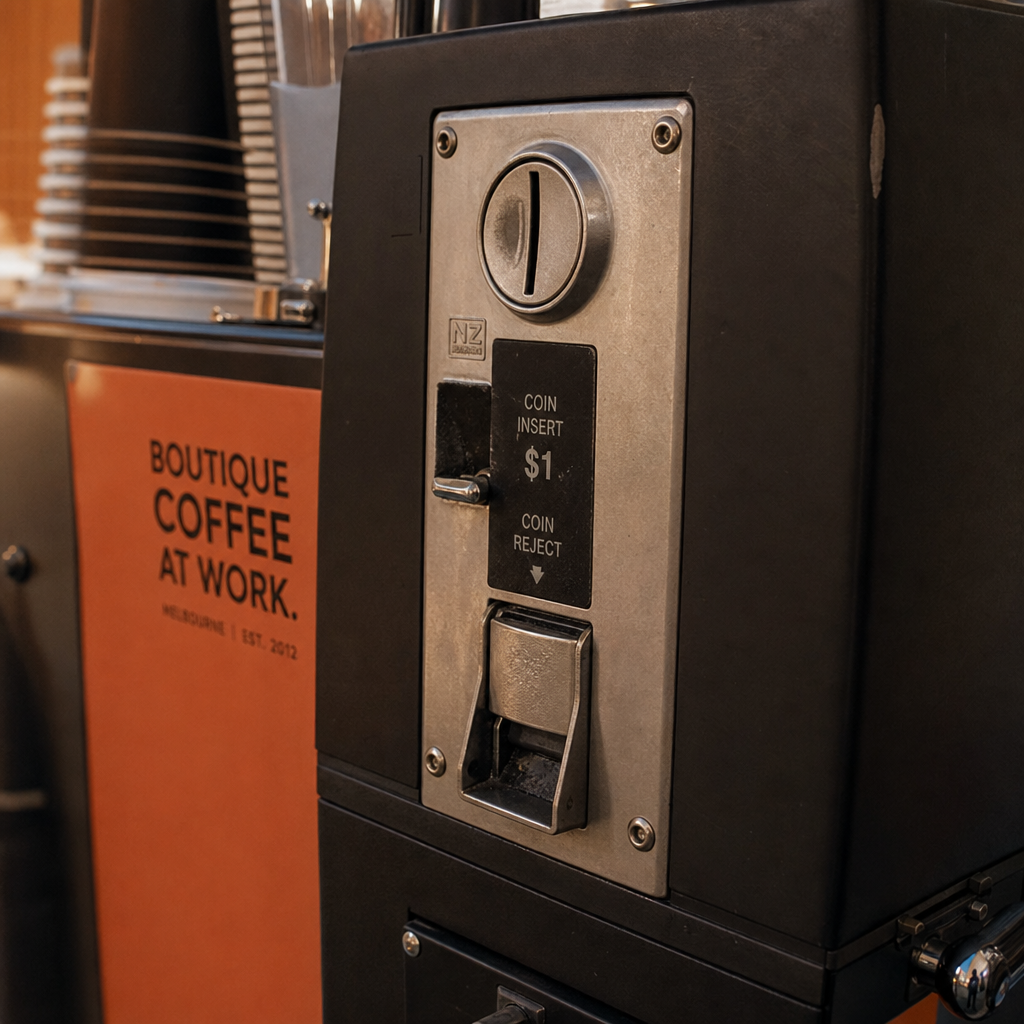
A common question I receive is whether a business should install a coin operated coffee machine. The answer depends entirely on who is drinking the coffee.
Coin operated coffee machines are perfect for public spaces, factories, and trade counters. If you run a hardware store, an auto mechanic shop, or a warehouse, your staff and customers might want to grab a quick coffee without claiming it on an expense account. A coin operated system lets you recoup the cost of the beans and milk. Some businesses charge a gold coin donation and put the proceeds toward the annual staff Christmas party.
However, in a corporate office environment, coin mechanisms are a mistake. Corporate teams expect coffee as a standard workplace perk, similar to free water, toilet paper, and stationery. Making staff at a professional services firm pay $1.50 for their morning flat white breeds resentment.
For corporate clients, we use automatic office coffee dispensers with a direct-debit flat rate. The business pays a single monthly rental fee, which includes beans, milk, and servicing. The team drinks for free. This model is designed around your culture and budget, keeping staff morale high without the friction of hunting for loose change.
The Hidden Costs of Cheap Pod Machines
Business owners often look at cheap capsule machines as an easy office solution. They are cheap to buy upfront, but they are a terrible long-term investment for any team over five people.
First, there is the cost per cup. Pod coffee is incredibly expensive compared to bulk beans. You are paying a premium for the packaging. If your team of 30 people drinks three coffees a day, your weekly pod expense will exceed the cost of renting a premium commercial machine with unlimited fresh beans.
Second, there is the environmental cost. Single-use aluminium and plastic pods create enormous waste. The Australian Packaging Covenant Organisation (APCO) continuously highlights the difficulty of recycling small format plastics and mixed materials. Offices that use pod machines end up with overflowing rubbish bins.
Third, pod machines lack the thermal stability required for high volume. They are built for domestic kitchens, not commercial environments. When a pod machine runs constantly, the pump fails and the coffee extracts poorly. If you want café quality made practical, you need commercial equipment.
Why Direct Accountability Beats Corporate Call Centres
Most corporate coffee suppliers route client issues through helpdesks, ticket systems, and tiered support teams. I disagree with this model entirely.
In my experience, one person staying accountable for every client produces a fundamentally better result. When a machine goes down, you do not want to speak to a call centre agent reading off a script. You want to speak to the person who installed the machine.
I run this business founder-led, always. We operate on a simple principle: one number, one person. When my clients call, I answer. Most fixes can be talked through in two minutes when the person who answers knows the client setup. If a part is broken, I drive out to their office in Melbourne and fix it myself.
My typical response time on any service call is 24 hours across my active client base. That speed is only possible because there is no internal runaround to navigate. This accountability is exactly why my average client relationship length is over 5 years. Clients stay because they trust the service.
The Six-Step Process: From First Call to Installed Machine
Getting a commercial machine into your office should not take weeks of negotiations. Over the past 17 years, I have refined my installation method to get Melbourne clients set up quickly. I call this The Six-Step Process. It takes most teams from first enquiry to a fully installed machine in 5 to 7 business days.
- Enquiry: Takes two minutes. The client submits basic team details and office location.
- Phone call with Chris: A 15 to 20 minute chat. We discuss machine shortlists and rough pricing.
- On-site visit: I come to your office for 30 minutes. We assess power points, plumbing access, and bench space.
- Install day: Takes 45 minutes. The machine is connected, the grinder is calibrated, and the first test shots are poured.
- First brew and training: 20 minutes. I train at least two staff members on basic operation and leave a cheat sheet.
- Ongoing rhythm: We establish weekly or fortnightly service visits. Beans and consumables are topped up constantly.
This process is straightforward because we do not overcomplicate the logistics. If you are ready to upgrade your workplace, you can claim a free trial to see how the machine performs in your office before committing.
Real Outcomes: Moving Beyond Instant Coffee
Installing the machine is only step one. The ongoing service dictates whether the setup is successful.
I want to share a real example from my own book of business. A mid-size Melbourne office, Pepperl+Fuchs Australia, was running a coffee setup that simply was not meeting the team needs. They were frustrated with the quality and the service response times.
I upgraded the office to a WMF commercial machine. We did a full installation, trained the staff, and included ongoing service in the monthly rental. The change was immediate. The site manager, Paul Bruno, reported easy daily use, exceptional coffee and hot chocolate quality, and consistent service that we maintained for years.
Having a maintained machine eliminates havoc in the workplace. A busy Melbourne workplace, AJM-JV, previously experienced massive disruption whenever their coffee machine failed during peak hours. The team relied on coffee to push through the afternoon slump. By providing a reliably maintained machine with regular scheduled servicing and direct personal contact for any issue, we eliminated that downtime. The office manager, Chrissie Straw, noted that reliable service meant they always had coffee when they needed it most.
These outcomes are not achieved through luck. They are achieved through maintenance and care. A Melbourne business in a busy retail environment needed consistently great coffee served daily to both staff and customers. By supplying fresh beans and a fully maintained machine, managing the supply and upkeep personally, we ensured they could serve great coffee every day without interruption. Client Michael May specifically credited the attention to detail as the reason their service ran flawlessly.
Month-to-Month Rentals: No Lock-In, Ever
Locking clients into long-term contracts protects business revenue and is standard practice for equipment rental across Australia. But it is the wrong approach.
Lock-in contracts make suppliers lazy. If a supplier knows you are trapped in a 36-month agreement, they have no incentive to answer the phone quickly when your machine breaks. They already have your money.
At Boutique Coffee at Work, all rentals are month-to-month with one months notice to exit and free machine pickup. No lock-in, ever.
Some people think this business model is risky. It is not. In 17 years of operation, doing this exclusively in Melbourne, the no-lock-in policy has never cost me a client worth keeping. Long-term clients retained by choice are worth infinitely more than clients retained by a contract. We currently manage active workplace clients renting 200+ machines because the service speaks for itself.
We earn your business every single month. If the coffee quality drops, or if the machine breaks and we do not fix it fast enough, you can send it back. This arrangement keeps us accountable.
The Curated Coffee Plan: Matching Beans to Your Team
A commercial coffee vending machine is only as good as the beans you put into it. Most suppliers offer a single house blend. They give every client the same dark, bitter roast because it is cheap and masks poor machine calibration.
We do things differently. I use a Curated Coffee Plan for every new onboarding and whenever a client wants to change their supply. This ensures the roast and blend matches the specific tastes of the team rather than defaulting to a one-size-fits-all supply.
The process is simple but highly effective:
- Assess Preferences: We ask about the teams drink preferences. Do they drink espresso or milk-based coffee? What strength do they prefer? Are there any flavours they actively dislike?
- Initial Match: Based on that profile, we start them on a well-matched blend. For example, a team that drinks flat whites might prefer a sweeter, medium roast with chocolate notes.
- Adjust Based on Feedback: We actively seek feedback within the first month. If the team finds the roast too strong, we switch the beans. We use dialled-in beans that suit the exact milk temperature and pour volume of the machine.
This flexibility ensures your team actually enjoys the coffee. Offering a premium product in the office improves productivity, staff retention, and overall workplace happiness.
Frequently asked questions
How much does a commercial office coffee vending machine cost?
The cost depends on the machine size and your team headcount. Most businesses opt for a monthly rental arrangement which includes the machine, fresh beans, milk, and routine maintenance. For a precise quote based on your office size, contact us directly for a fast response.
Do modern office vending machines still use instant powder?
No. Quality commercial setups use whole, fresh roasted beans and real fresh milk. Instant powder is only found in outdated machines or cheap domestic setups. Modern bean-to-cup machines grind the beans fresh for every single cup.
Are coin operated coffee machines suitable for staff rooms?
Coin operated machines work well in public areas, retail environments, and factories. However, for corporate staff rooms, they are rarely a good fit. Professional staff expect coffee as a free perk. A monthly all-inclusive rental provides a much better employee experience.
How often does the coffee machine need maintenance?
High-use commercial machines require weekly or fortnightly preventative maintenance. This includes restocking beans, replacing fresh milk containers, cleaning the brew group, and calibrating the grinder. Our proactive service model reduces maintenance emergencies significantly.
What happens if the coffee machine breaks down during work hours?
If your machine breaks down, you call one number. Because we do not use call centres, you speak directly to the technician. Most issues can be resolved over the phone immediately. If a part fails, we guarantee a 24-hour on-site response time to get you pouring again.
Can we switch coffee beans if our team does not like the blend?
Yes. Through our Curated Coffee Plan, we actively monitor staff feedback. If your team dislikes the initial roast, we change the blend. The goal is to provide coffee your team actually wants to drink.
Do we have to sign a long-term lease?
No. We operate strictly on month-to-month rentals. You can cancel with one month's notice and we will pick up the machine for free. We believe in earning your business through service, not legal contracts.
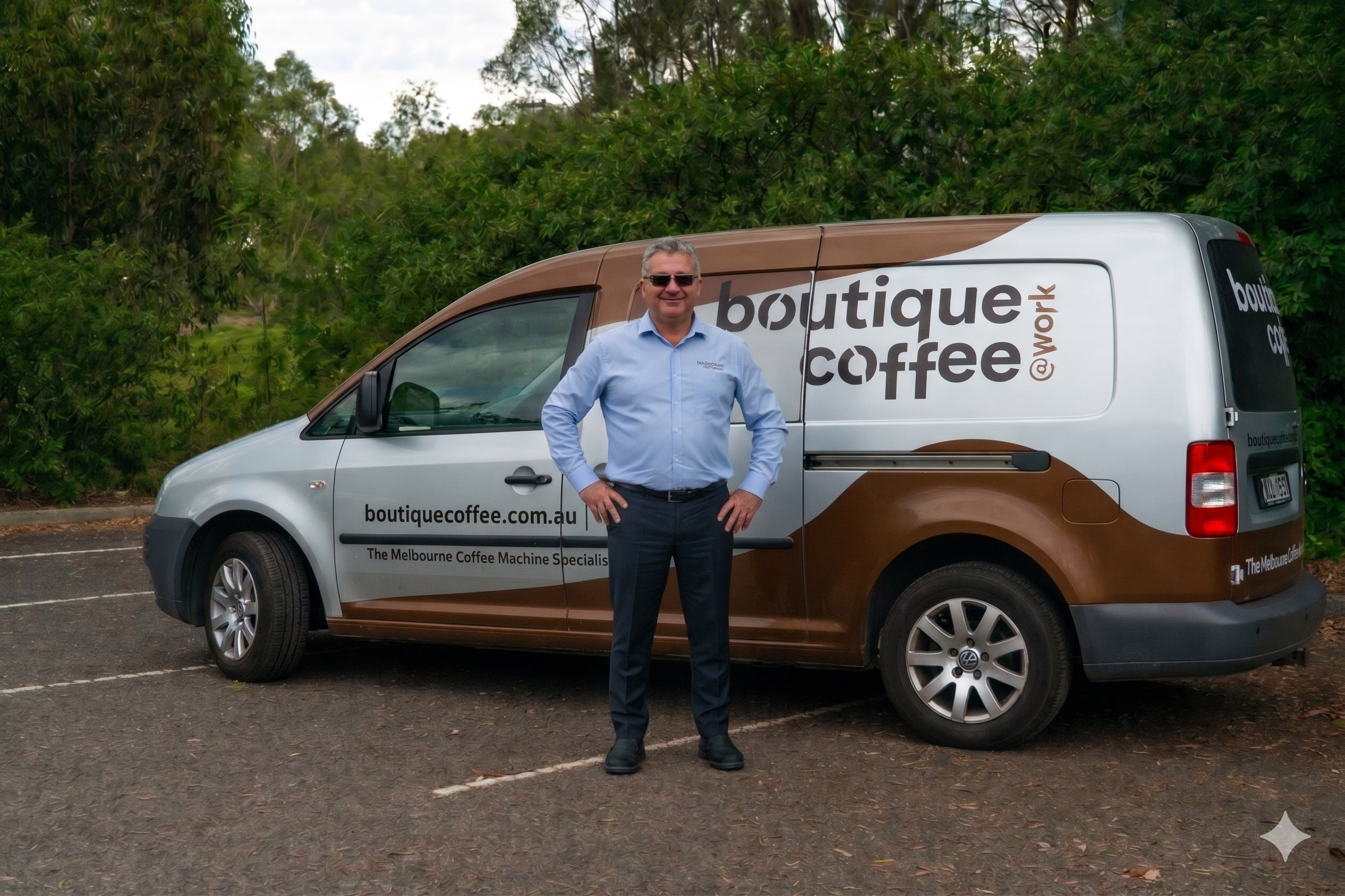
Chris
Chris
Keep reading
Which Melbourne Industries Rent Commercial Coffee Machines (And What Each One Actually Needs)
Melbourne businesses across professional services, medical and allied health, warehousing, manufacturing, education, and creative workplaces all rent…
Office Coffee Machine Service, Maintenance and Breakdown Support in Melbourne: What Good Support Actually Looks Like
Good office coffee machine service in Melbourne means scheduled preventative visits, one phone number answered by someone who knows your machine, and a typical…
Office Coffee Machine Rental Pricing in Melbourne: Transparent Plans and What's Included
Office coffee machine rental in Melbourne is priced as a monthly fee driven mainly by headcount, daily cup volume, machine type, milk system and site setup. At…