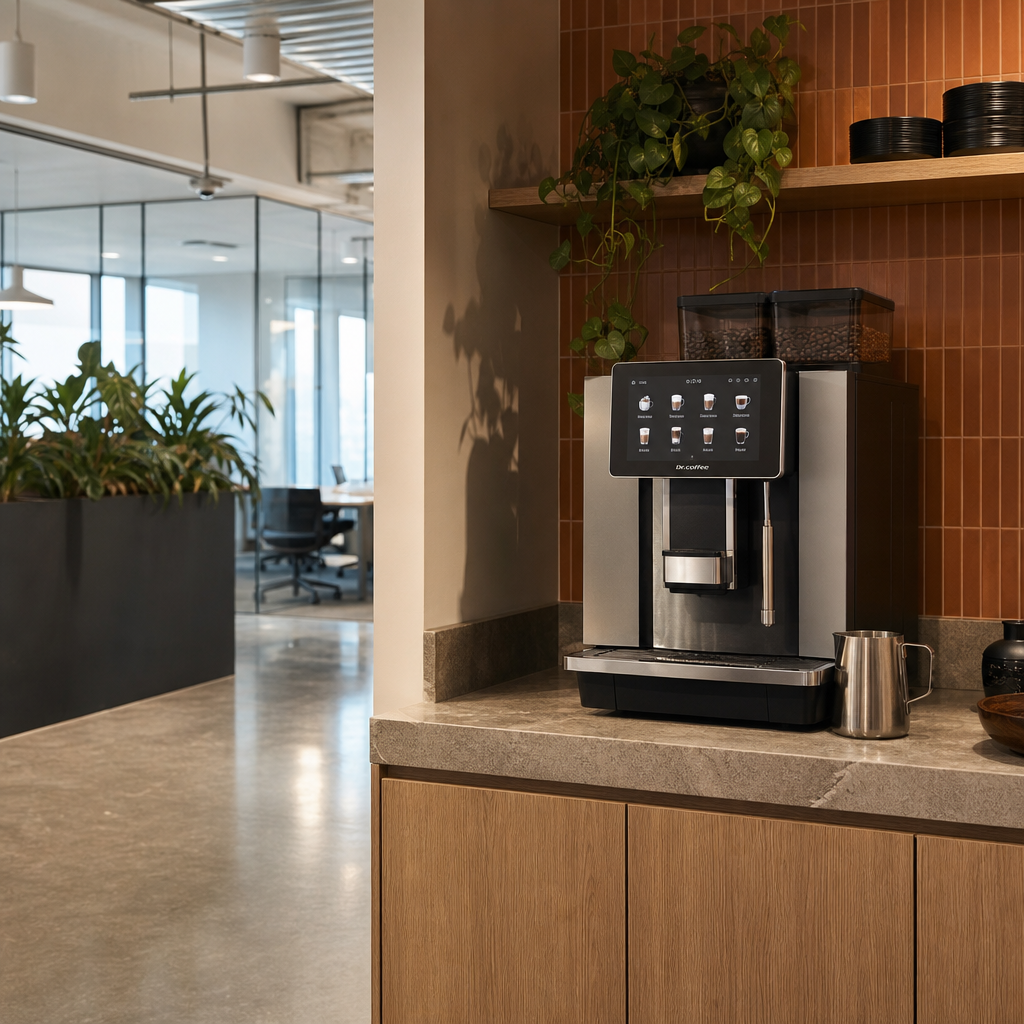
Choosing an office coffee supplier is a decision that directly impacts your daily operations, staff morale, and facility management budget. Most businesses approach this process backwards. They look at the price of the machine or the beans first, and treat the ongoing service level agreement as a minor detail buried in the contract. This is a costly mistake. When a machine goes down during the morning rush, the purchase price of the equipment does not matter. What matters is how fast someone answers the phone and how quickly a technician walks through the door.
I have spent the last 17 years supplying commercial coffee machines to Melbourne businesses. Since founding Boutique Coffee in 2008, I have seen exactly what happens when an office gets locked into a bad supplier agreement. I have also seen the operational change that happens when a workplace finally gets reliable, café-quality coffee made practical. The gap between average coffee and great coffee is entirely a matter of equipment quality, fresh beans, and strict maintenance protocols.
This guide provides a strict checklist for evaluating B2B coffee suppliers. We will cover service level agreements, call-out response times, equipment guarantees, and the specific blind spots that facility managers miss during the procurement process. Whether you are upgrading a 10-person boardroom or managing a 400-person corporate centre, this framework will help you separate genuine coffee partners from simple equipment peddlers.
Key Takeaways
- Service level agreements (SLAs) and guaranteed call-out times dictate the actual value of your coffee contract. Price per kilo is irrelevant if the machine sits broken for three days.
- Automated traditional espresso machines consistently outperform capsule systems for both cost per cup and waste reduction in offices of 20 or more people.
- You need a dedicated coffee machine maintenance contract that includes preventative servicing, not just reactive repairs.
- Beware of long-term lock-in contracts. The best suppliers rely on month-to-month agreements because they retain clients through reliable service.
- Supplier accountability is non-negotiable. If your supplier routes faults through a generic helpdesk or ticket system, your downtime will increase.
Office Coffee Supplier Evaluation Summary
| Evaluation Criteria | What to Demand from a Supplier | Red Flags to Avoid |
|---|---|---|
| Contract Length | Month-to-month with one month's notice | 3-5 year lock-in contracts with break fees |
| Service Response Time | Guaranteed 24-hour on-site response | "Best effort" or "3-5 business day" SLAs |
| Support Model | Direct mobile number for your account manager | National call centres and tier-1 helpdesks |
| Equipment Strategy | Matched to team size and peak usage capacity | Upselling high-spec machines to small teams |
| Maintenance Model | Preventative monthly servicing included | Reactive repairs billed at premium call-out rates |
| Bean Supply | Fresh, locally roasted beans delivered on a schedule | Generic import beans sitting in a warehouse for months |
The Real Cost of a Bad Office Coffee Setup
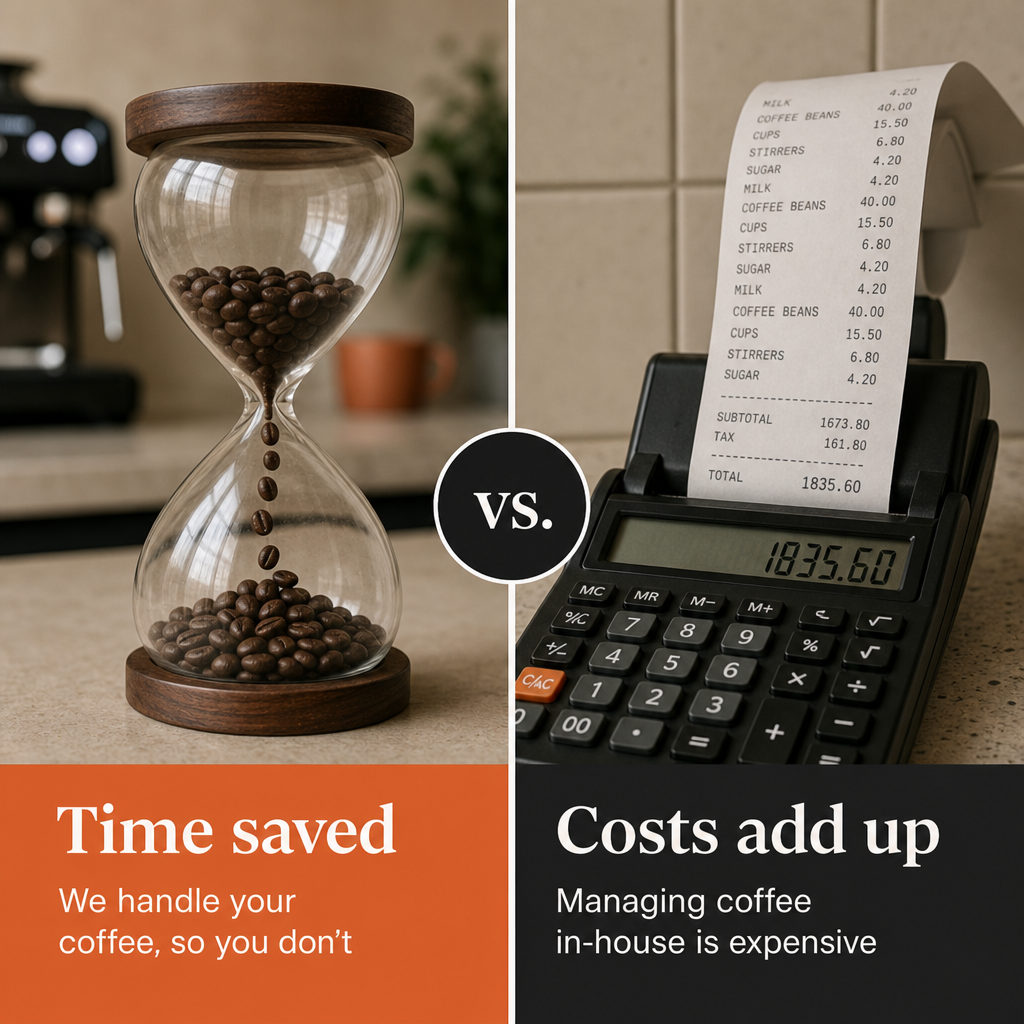
When evaluating an office coffee supplier, the biggest trap is focusing purely on the upfront equipment rental or the cost per kilo of beans. Facility managers often pull me into meetings to complain about their current setup, and the stories are always the same. The real cost of a bad coffee supplier is hidden in wasted staff time, low morale, and outsourced coffee runs.
Consider the maths. If you have a team of 50 people, and half of them leave the office for 15 minutes each day to buy a $5 coffee, your business is absorbing a massive productivity sink. Staff are spending $125 a day on external coffee, equating to thousands of dollars a year leaving the building, plus the lost billable hours. This usually happens because the internal coffee solution is unreliable, produces terrible milk texture, or constantly breaks down.
A reliable setup changes this behaviour instantly. I always remind clients of a conversation I had with Paul, a site manager at Pepperl+Fuchs Australia. After we installed a proper WMF commercial machine, Paul told me his staff appreciated having great coffee so much that productivity noticeably improved. He told his team, "No problem, just keep doing what you're doing." When your coffee setup is reliable, you keep your staff in the building, maintain workflow momentum, and save your team money.
The Ultimate Office Coffee Supplier Checklist
If you are wondering what to look for in office coffee service, you need a rigorous evaluation process. Use this checklist to interrogate potential suppliers during the proposal stage.
1. Scrutinise the Service Level Agreement (SLA)
Your SLA is the backbone of the supplier relationship. A coffee machine is a mechanical device with pumps, grinders, and boilers. It will require service. A strong SLA must dictate exactly what happens when a failure occurs.
Look for a guaranteed maximum response time. At Boutique Coffee, our standard is a 24-hour response time on any service call across our active client base. If a supplier offers a "best effort" timeline or takes 3 to 5 business days to dispatch a technician, walk away. When a machine is down during peak office hours, a three-day wait causes havoc. Your team goes without coffee, and the office morale plummets.
2. Demand Direct Accountability
Corporate coffee suppliers will often route client issues through helpdesks, ticket systems, and tiered support teams. This is a structural failure of the B2B coffee industry. When a boiler leaks or a grinder jams, you do not have time to log into a portal, submit a ticket, and wait for a Level 1 technician to read a script.
My non-negotiable position is that one person stays accountable for every client, from setup to ongoing service. You get one number and one person. There are no call centres and no corporate runaround. This is how we maintain a 24-hour turnaround time. Most fixes can even be talked through in two minutes on the phone when the person answering knows your specific machine and how it is plumbed.
3. Evaluate the Coffee Machine Maintenance Contract
Read the fine print on the maintenance contract. Many suppliers offer a cheap rental rate but exclude preventative maintenance, charging you a premium call-out fee when the machine inevitably breaks down.
Your contract must include a preventative maintenance schedule. A good supplier will visit your site regularly to descale, clean, and replace worn group head seals before they fail. At AJM-JV, a busy Melbourne workplace, the client explicitly noted that reliable, regular service eliminated the havoc a broken machine caused. Regular visits also ensure the machine is fully stocked with necessary consumables. A coffee machine maintenance contract should be a partnership for uptime, not just an insurance policy for breakdowns.
4. Reject Long-Term Lock-In Contracts
Locking clients into long-term contracts is standard practice for equipment rental. Suppliers do this to protect their revenue even if their service quality drops. Do not accept these terms.
In 17 years of business, I have never enforced a long-term lock-in. All our rentals are month-to-month with one month's notice to exit, and we provide free machine pickup. Long-term clients retained by choice are worth significantly more than clients retained by contract. If a supplier is confident in their service levels and machine quality, they will not need a 3-year contract to keep your business. They will rely on the fact that your team never goes without coffee.
5. Assess Machine Sizing and Honest Fit
Most suppliers try to upsell to a higher-specification machine to increase the deal value. They will tell you that a high-capacity machine will serve your future growth needs. This is a sales tactic, not sound advice.
A 12-person team does not need a $15,000 Eversys. Conversely, an 80-person team will completely destroy a home-grade Jura within a month. You need a supplier who recommends the machine that fits the team's actual size and daily output requirements. Honest fit advice builds the kind of long-term relationships that sustain a business. I am not trying to be the biggest. I focus on matching the equipment to your actual environment.
6. Ensure the Beans Are Fresh and Locally Roasted
Great coffee does not come from a tin sitting on a supermarket shelf. The quality of your office coffee is directly tied to the freshness of the beans. Many large B2B suppliers use cheap, stale imported beans that taste burnt or bitter.
Your supplier should provide fresh, locally roasted beans delivered on a reliable schedule. In Melbourne, we have access to some of the best roasters in the world. Your team deserves dialled-in beans that produce café-quality espresso. Ensure your supplier rotates stock properly and delivers beans that were roasted days ago, not months ago.
7. Check the Training and Onboarding Process
A commercial coffee machine is only as good as the person operating it. If your supplier drops off a machine and leaves a manual, your team will fail to use it properly.
Look for a supplier who includes comprehensive training as part of the installation. We train at least two staff members on-site, show them how to texture milk correctly, how to clean the steam wand, and leave a cheat sheet. The training must cover daily cleaning protocols to ensure the machine functions properly for years.
Equipment Strategy: Automated vs Pod Systems
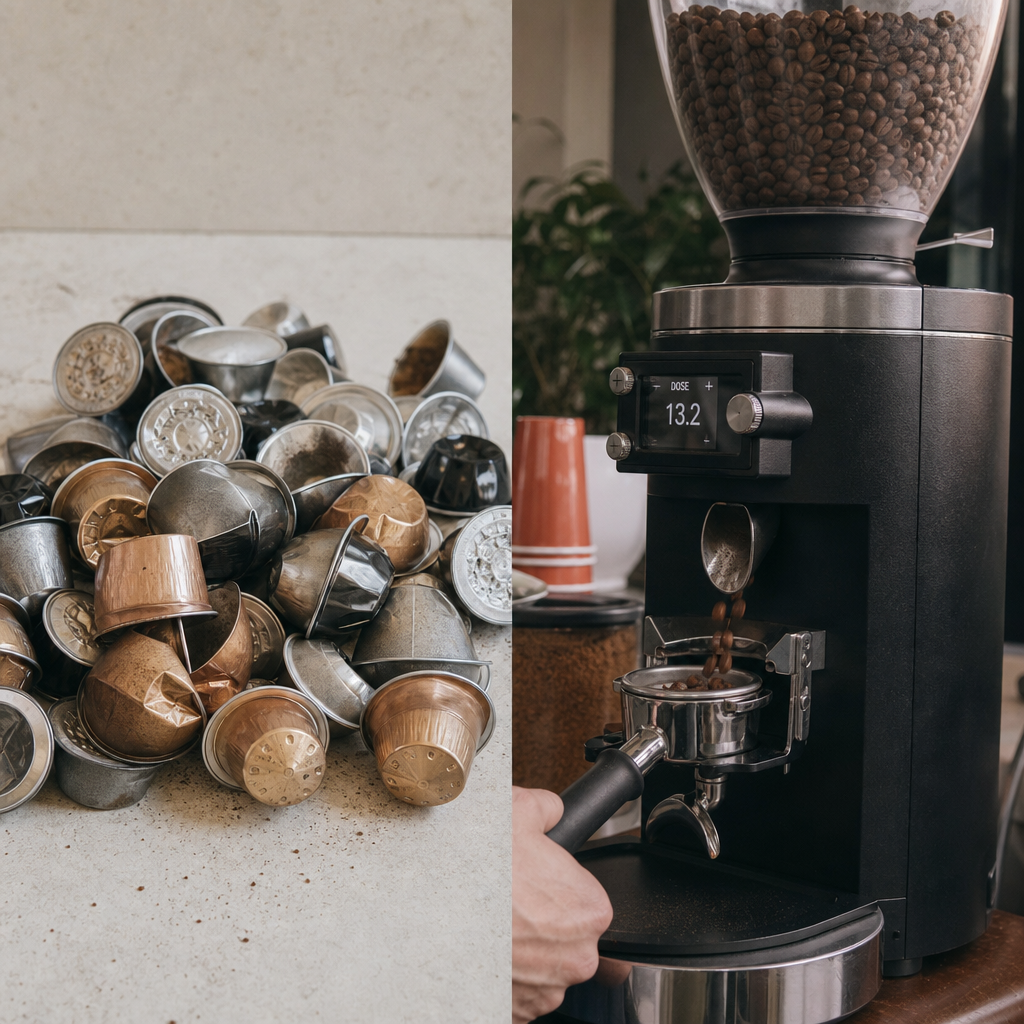
A major decision in choosing an office coffee supplier is the equipment format. Suppliers generally offer two main options: fully automated bean-to-cup machines or pod-based systems. Facility managers need to analyse the long-term cost and environmental impact of both.
Pod systems, like Nespresso, are popular for small offices of 1-5 people. They require zero training and have a low upfront machine cost. However, the cost per cup is exorbitant. You pay a massive premium for the aluminium packaging. Worse, the environmental impact of aluminium pods is severe, even with recycling programmes. You are left paying commercial waste fees to dispose of packaging.
Fully automated bean-to-cup machines are the standard for offices of 10 or more people. These machines grind fresh beans, tamp the coffee, and extract the shot automatically. They produce café-quality coffee at a fraction of the cost per cup compared to pods.
The key to success with automated machines is the preventative maintenance schedule. If you keep the machine clean and descaled, it will outlast a pod system by years. I supplied a fully maintained machine to a Melbourne retail business, and the client specifically credited our attention to detail as the reason they could serve great coffee every single day without interruption. The machine never missed a beat.
The Six-Step Process for Commercial Coffee Setup
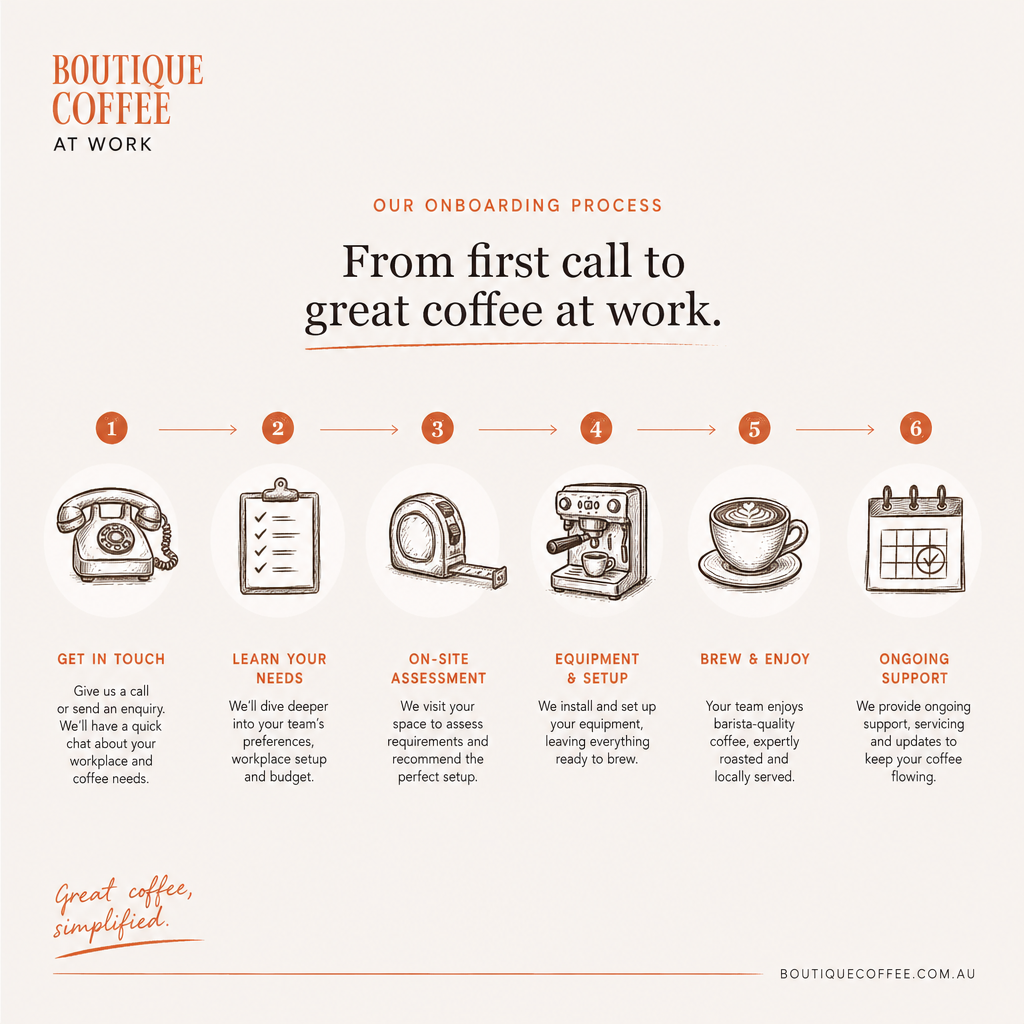
To show you exactly what a premium installation looks like, here is my proprietary Six-Step Process. We use this for every new client engagement to ensure no detail is missed.
- Enquiry (2 minutes): The client submits basic team details and office location. We capture the core requirements immediately.
- Phone call with Chris (15 to 20 minutes): We discuss the machine shortlist and rough pricing. I ask direct questions about peak usage times and milk volume to narrow down the equipment options.
- On-site visit (30 minutes): I visit the office to assess power, plumbing, bench space, and ventilation. Installing a commercial machine requires specific spatial considerations that cannot be solved over the phone.
- Install day (45 minutes): The machine is connected to water and power. The grinder is calibrated, the boiler reaches temperature, and we pull test shots to dial in the extraction.
- First brew and training (20 minutes): I train at least two staff members on site. We run through milk texturing, cleaning cycles, and daily maintenance. A cheat sheet is left next to the machine.
- Ongoing rhythm: Weekly or fortnightly service visits ensure beans and consumables are topped up. This ongoing rhythm prevents the office from ever running dry.
This structured approach is designed to take most Melbourne clients from the first call to an installed machine in 5 to 7 business days. A rigorous onboarding process ensures the machine is chosen on purpose and designed around your culture and budget.
Case Study: 30% Cost Reduction with Managed Service
One of the clearest examples of cost reduction through a managed service involved a mid-size Melbourne office. The company was running an existing coffee setup that simply was not meeting the team's needs or expectations.
The client was tied to a contract with a national supplier who provided a mid-tier automated machine. The beans were generic, stale, and supplied in bulk. The machine broke down frequently, and the supplier took three days to dispatch a technician. Staff were constantly leaving the building to buy coffee from the local café, negating any savings the business thought they had secured on cheap beans.
We sat down and analysed their actual consumption data. I upgraded the office to a WMF commercial machine, with full install, training, and ongoing service included in the monthly rental. I matched the bean profile to the team's preferences using my Curated Coffee Plan, asking about their milk-based drink habits and strength preferences.
The result was an immediate 30% reduction in total coffee expenditure.
How did we save them money while upgrading the equipment?
- Eliminated Outsourced Coffee: The quality was so high that staff stopped doing coffee runs. The office stopped losing billable hours.
- Bulk Bean Pricing: By shifting to fresh, locally roasted beans supplied on a regular cycle, the cost per cup dropped significantly compared to their previous retail-grade supply.
- Zero Downtime Costs: Preventative maintenance stopped the constant breakdowns. We eliminated the hidden cost of staff standing around a broken machine waiting for repairs.
As Paul Bruno, the client, reported at the time, the change was noticeable across the whole office. He noted easy daily use, great coffee and hot chocolate quality, and consistent service maintained for years. This is what happens when you work with a coffee partner, not just a supplier.
Curated Coffee Plan: Matching Beans to Your Team
A critical failure of large B2B suppliers is assuming all coffee drinkers are the same. They drop off a standard medium roast blend and ignore your team's specific tastes. To ensure you get the right beans, you need a structured matching process.
My Curated Coffee Plan is a simple but effective framework to match the roast and blend to your specific team rather than defaulting to a one-size supply.
- Assess Preferences: We ask the team about their drink habits. Do they drink flat whites or long blacks? Do they prefer a strong, dark roast or a smoother, lighter flavour?
- Initial Match: We start the team on a well-matched blend based on that profile. For heavy milk drinkers, we select a darker roast that cuts through the milk. For black coffee drinkers, we might select a sweeter, fruitier single origin.
- Iterative Adjustment: We adjust based on team feedback within the first month. If the blend is too strong, we switch the delivery. There is no lock-in to a specific bean.
This plan guarantees that your team actually enjoys the coffee moments that matter. When we set up AJM-JV, Chrissie Straw specifically noted that reliable, regular service meant the team always had coffee when they needed it most. We keep your team happy with good quality coffee and hot chocolate, and that requires matching the beans to the people.
Evaluating Supplier Accountability and Support
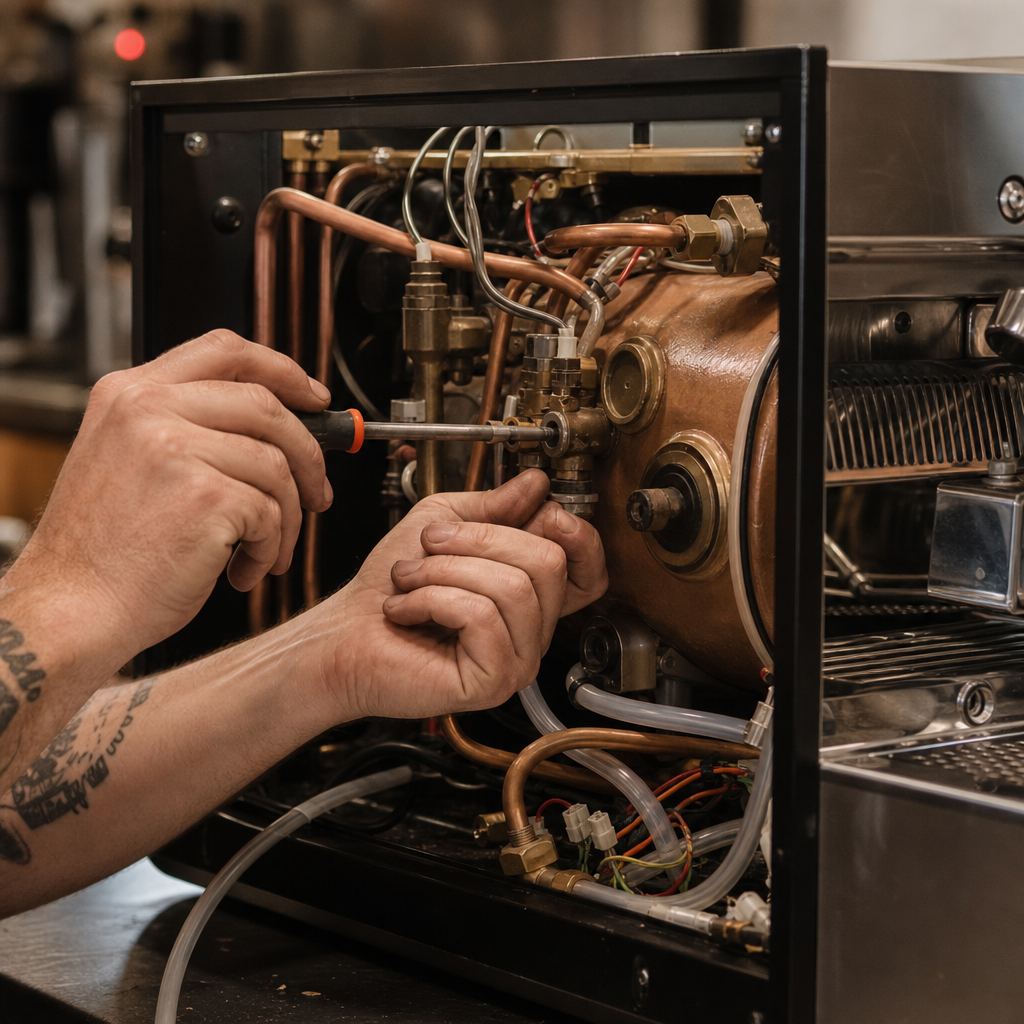
The final pillar of choosing office coffee supplier is accountability. When things go wrong, you need absolute confidence that your supplier will resolve the issue.
I recently attended a client site in Melbourne to service a machine. While I was there, a staff member approached me and asked for my business card. He worked at a previous client of mine and had since moved to a new company. He told me the coffee supplier they currently use "provide the worst coffee" and asked me to meet with senior management to help set up new arrangements.
This interaction perfectly summarises the value of founder-led service. In 17 years of operation, I have driven throughout Melbourne maintaining client coffee machines. I make sure they are operating smoothly and fully stocked. The personal connection and direct accountability build a level of trust that national corporations simply cannot replicate.
When you evaluate a supplier, ask them directly who handles the servicing. Ask if the technician is employed directly or outsourced. Ask if you will have a direct phone number for the account manager. At Boutique Coffee, the model is founder-led, always. You work directly with me.
We currently manage over 200 active Melbourne workplace clients renting equipment. Our average client relationship length is over 5 years. This retention rate is built entirely on trust, reliability, and an unwavering commitment to keeping your team caffeinated.
Avoiding Common Office Coffee Procurement Traps
To wrap up the evaluation process, here are the specific traps you must avoid when finalising your procurement decision.
- Avoid the Cheap Machine Upsell: A supplier offering a "free" machine in exchange for an expensive bean contract is hiding the true cost. Always calculate the cost per cup based on realistic daily consumption.
- Ignore Brand Loyalty: Do not choose a supplier just because they stock a specific machine brand you recognise. The brand matters less than the maintenance plan and the bean quality. A well-maintained lesser-known machine will always outperform a neglected premium brand.
- Do Not Accept Hidden Consumables Fees: Ensure your contract includes cleaning supplies, water filters, and standard wear-and-tear parts. A supplier who bills you separately for cleaning tablets is nickel-and-diming your budget.
How to Transition to a Better Coffee Supplier

If you have read this checklist and realised your current supplier is failing you, the transition process is simple. Do not let the fear of switching stop you from improving your workplace.
With over 200 active Melbourne clients and experience installing for teams of up to 400 people, Boutique Coffee is equipped to handle your transition smoothly. We can manage the logistics of removing your old machine, installing the new commercial setup, and training your staff with zero downtime. We operate with a strict "no lock-in, ever" policy, so you can experience the difference risk-free.
When you are ready to evaluate your options, we provide an honest comparison. We will assess your team size, your peak usage times, and your taste preferences to build a tailored proposal. If your team needs better coffee, faster service response times, and a partner who answers the phone, reach out today.
To see exactly how our process works, you can review our how it works guide. If you are ready to experience the difference firsthand, request a free trial. For a direct conversation about upgrading your setup, contact us today to request a supplier comparison quote.
References
- Australian Competition and Consumer Commission (ACCC). (2026). Product safety guidelines for electrical appliances and commercial equipment.
- Fair Work Ombudsman. (2026). Workplace Amenities and Facility Management Provisions.
- Sustainability Victoria. (2026). Commercial Waste Management and Recycling Guidelines for Aluminium and Plastics.
- Food Standards Australia New Zealand (FSANZ). (2026). Food Safety Standards for Commercial Beverage Preparation Equipment.
- Australian Bureau of Statistics (ABS). (2026). Wage Price Index Australia: Measuring Billable Hours and Productivity.
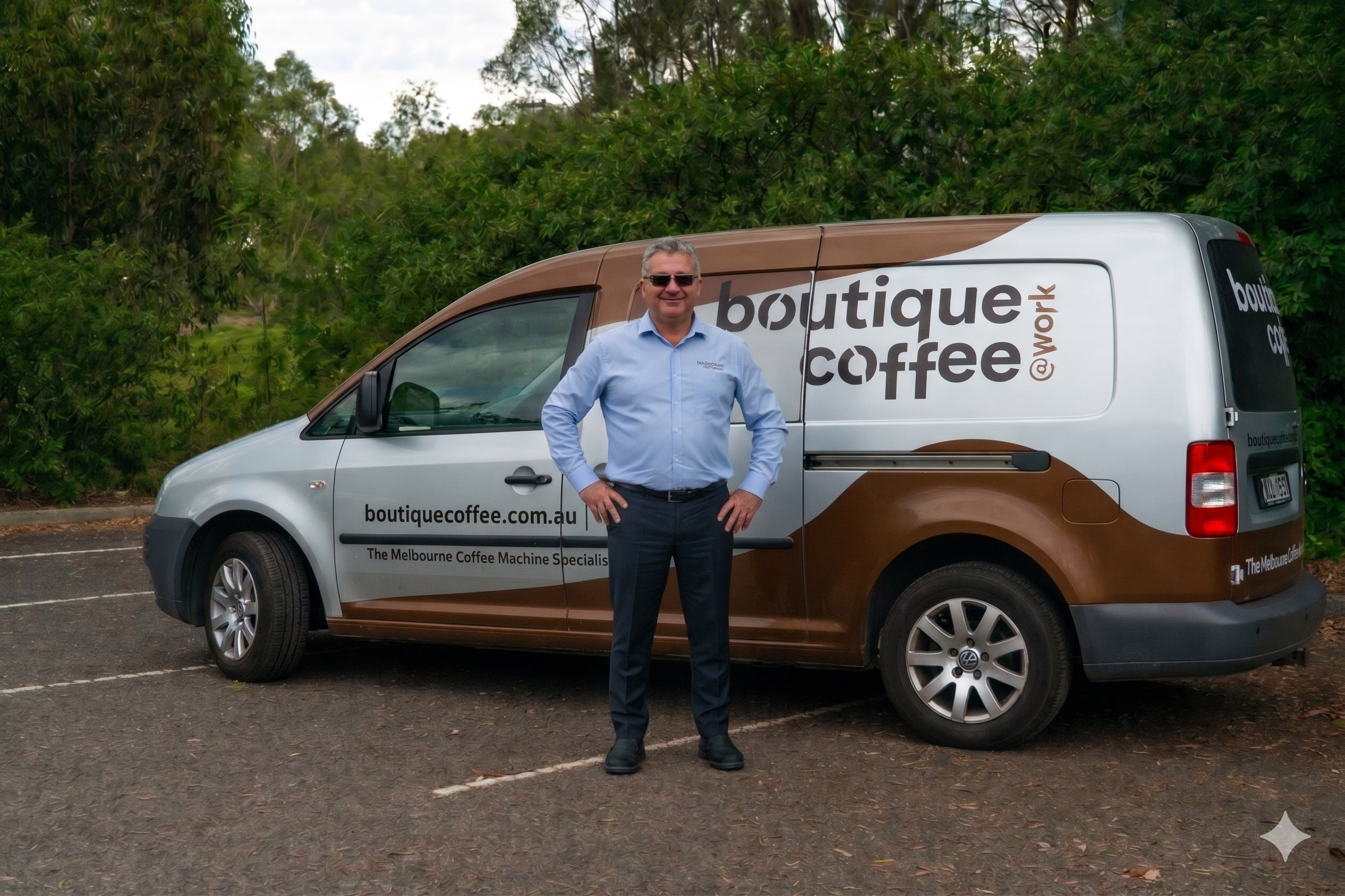
Chris
Chris
Keep reading
Office Coffee Subscriptions vs Machine Rental: Which is Better?
An office coffee subscription is better when you already own suitable equipment and only need fresh beans delivered. Machine rental suits offices needing…
Office Coffee Machine Service, Maintenance and Breakdown Support in Melbourne: What Good Support Actually Looks Like
Good office coffee machine service in Melbourne means scheduled preventative visits, one phone number answered by someone who knows your machine, and a typical…
Office Coffee Machine Rental Pricing in Melbourne: Transparent Plans and What's Included
Office coffee machine rental in Melbourne is priced as a monthly fee driven mainly by headcount, daily cup volume, machine type, milk system and site setup. At…